Europe's wine industry is in the throes of a structural crisis that no single factor can explain. Falling consumption, shifting consumer preferences, rising global competition, and climate volatility have converged to create what French wine industry leader Bernard Farges describes as a "painful restructuring". The continent that has defined wine culture for millennia is now struggling to redefine itself for a world that no longer drinks the way it used to.
The Numbers Tell a Bleak Story
In the first four months of 2026, Italy's PDO wine exports fell 6.2% in value compared to the same period in 2025, with volumes down 3%. Italy is not alone. France's PDO wine exports dropped 3.4%, Germany's fell 5.5%, and Spain's tumbled 8.5%. France remains the largest exporter by value, but even its total of €2.8 billion in early 2026 represents a significant decline.
“The statistics are stark.”
EuroAsia.News
Red wine, once the undisputed king of European exports, is bearing the brunt of the downturn. In Germany, accumulated sales of PDO wines in Württemberg and Rheinhessen fell by up to 25%, with red and rosé prices now standing 27% and 29% below the five-year average. The EU has responded with emergency measures, granting France €40 million and Germany €14.16 million for crisis distillation to reduce surpluses.
The China Factor: From Customer to Competitor
Perhaps the most significant structural shift is China's evolution from Europe's most promising export market into a competitor. Chinese domestic wine production fell 17.1% in 2025 to just 97,000 kiloliters—a historic low. The industry is in deep contraction, but the long-term trajectory is unmistakable: China is building its own wine culture.
A 2026 government austerity directive banning alcohol at official events has devastated the high-end wine gifting market, a traditional mainstay for premium French and Italian imports. The sales channel that once propelled growth has largely disappeared, forcing brands to pivot to private consumption and digital platforms.
Meanwhile, Chinese producers are learning fast. At the 7th Wine T7 Summit in May 2026, leading domestic producers like Changyu, COFCO, and Dynasty gathered to address the crisis. Industry secretary-general Huo Xingsan noted a "mouthfeel equal rights movement"—blind tastings with millions of views showed that a 100-yuan wine can beat a 1,000-yuan wine. The message: Chinese consumers are becoming sophisticated, and they are no longer automatically drawn to European labels.
Heritage Vineyards: Europe's Living History
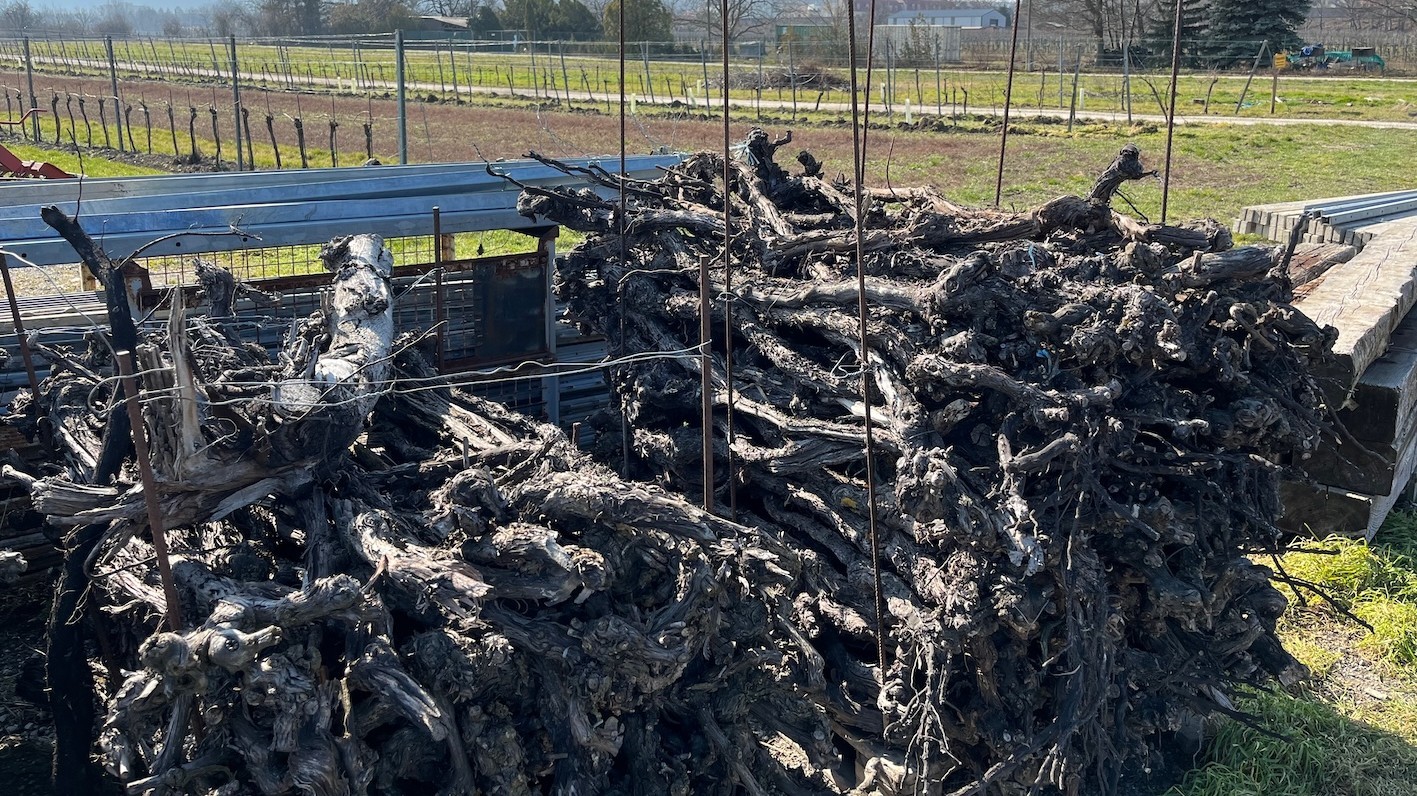
Amid the gloom, Europe's centenary vineyards stand as monuments to resilience. These are the survivors of phylloxera, the 19th-century pest that destroyed most of Europe's vineyards. "Nude tree trunks, gnarled and twisted, grown free to follow capricious arabesques," writes one Italian wine historian. These pre-phylloxera vines produce just 15 to 30 quintals per hectare but deliver grapes of exceptional quality and concentration.
Rioja, Spain, home to the largest concentration of old-vine vineyards in Spain, has launched an ambitious certification program. The DOCa Rioja regulatory council has identified 8,642 hectares of old vines (planted in 1980 or earlier) and certified 240 centenary plots totaling 74.83 hectares. The first certified plot, planted in 1920, features Tempranillo and Viura vines that "seem to grow from the rocks".
The Toro region, also in Spain, boasts vines up to 200 years old, protected from phylloxera by sandy soils. Some of these ungrafted vines are owned by Bodega Numanthia, acquired by LVMH in 2008. Yet even these survivors face new threats—climate change has forced the estate to consider irrigating its oldest vines for the first time.
Mount Etna in Sicily offers another remarkable example, with ancient, untrained vines clinging to volcanic slopes at up to 1,000 meters altitude. These pre-phylloxera plantings, some over a century old, produce wines of extraordinary minerality that have become cult favourites among wine enthusiasts.
The Non-Alcoholic Gambit: Can It Save the Industry?
As traditional wine sales slump, one segment is booming: non-alcoholic and low-alcohol wine. The European non-alcoholic wine market was valued at €701.6 million in 2024 and is projected to reach €1.45 billion by 2033, growing at 8.39% annually. The EU is actively encouraging the category, with new regulations allowing dealcoholised wines to be produced more flexibly, including sparkling varieties.
At the Wine Paris fair in February 2026, no- and low-alcohol wines had their own dedicated space for the first time. French Bloom, a French producer whose alcohol-free sparkling wine sells for over €100 a bottle, expects to sell one million bottles in 2026 and has secured investment from LVMH. The brand has even become the official alcohol-free sparkling wine sponsor of Formula 1 .
Italy is playing catch-up. Dealcoholised wine production is projected to surge 90% in 2026, driven largely by export demand from the United States, United Kingdom, and Germany—markets that generated over €1.2 billion in retail sales in 2025. Veneto is emerging as the hub, with producers investing in technology to remove alcohol while preserving aroma and structure.
Yet significant challenges remain. Most dealcoholised wines are made by heating wine under vacuum to evaporate the alcohol—a process that also strips away essential aromas. Some producers add natural or artificial flavours to compensate, but the result often lacks persistence and complexity.
Alternative approaches exist. Benchmark Drinks, the UK group behind celebrity brands for Elton John and Kylie Minogue, uses a different method: fermenting grape juice with bacteria that produce no alcohol, then adding Chinese green tea for tannins and complexity. The Kylie Minogue rosé has sold over a million bottles, even as wine purists question whether it qualifies as wine at all.
Taste remains a barrier—25% of potential buyers are put off by poor quality. And Italy's domestic market has been slow to embrace the category, with 71% of restaurants expressing no interest in listing dealcoholised wines. For now, retail is the main growth channel, and exports are the engine.
A Future in Transformation
The European wine industry is not dying—but it is fundamentally transforming. Vineyard area is shrinking: Farges estimates France will decline from 800,000 hectares to perhaps 600,000 over the coming years. The EU's new "Wine Package" offers grubbing-up support, climate adaptation funding, and digital labelling harmonisation. Producers are looking to emerging markets in Africa and South America, though volumes remain modest.
The crisis is forcing the industry to confront questions it has long avoided: Who drinks wine today? Who will drink it tomorrow? Can a product rooted in 2,000 years of tradition adapt to a generation that values health, sustainability, and authenticity? The answers are still being written—but the next chapter of European wine will look very different from the last.