Elon Musk announced the decision on 6 November, saying factory space would accommodate increased Cybercab robotaxi production. He did not clarify whether the pickup could move elsewhere or disappear entirely. The confirmed decision concerns Texas, currently its only known manufacturing location.
The retreat marks a striking reversal for a vehicle intended to challenge America’s established pickup manufacturers. Its stainless-steel body attracted worldwide attention, but the distance between ambitious promises and sustained customer demand became increasingly difficult to ignore.
From shattered glass to delayed deliveries
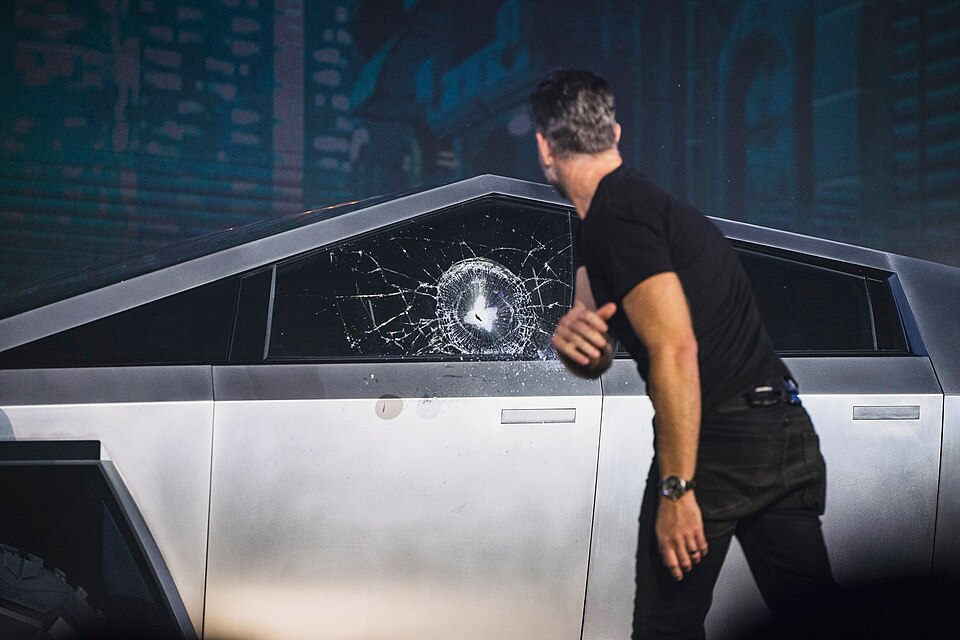
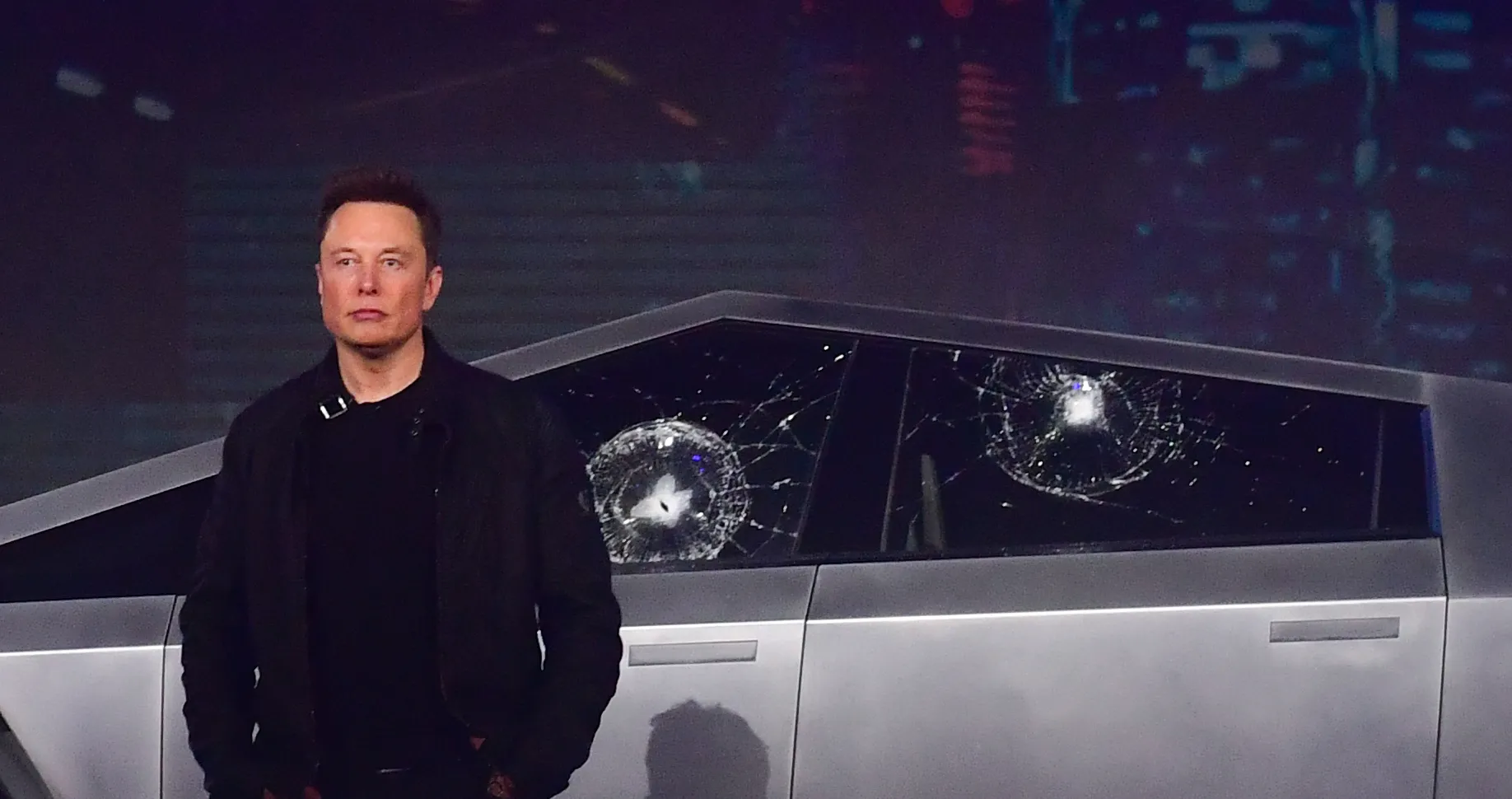
Unveiled on 21 November 2019, the Cybertruck looked closer to a science-fiction prop than a conventional work vehicle. Tesla promoted its unusually hard stainless-steel exterior, while an onstage demonstration famously cracked the supposedly resistant windows. Production was initially scheduled for late 2021; first customer deliveries eventually arrived on 30 November 2023, approximately two years later.
Tesla advertised an entry model at $39,900 and a top version at $69,900, promising more than 500 miles—805 kilometres—of range for the latter. These were development targets, rather than specifications of vehicles customers could buy.
At the 2023 launch, the announced entry price had risen to $60,990, approximately 53% above the original figure. The all-wheel-drive version was listed at $79,990. Its advertised range of 340 miles, or 547 km, was substantially below the original flagship ambition, although the configurations were different. The promised affordable pickup had become a considerably more expensive purchase.
“The original proposition combined radical styling with competitive prices.”
EuroAsia.News
Sales fell instead of scaling up
US sales estimates show the commercial reversal. Cox Automotive figures put Cybertruck deliveries at 38,965 in 2024, falling to 20,237 in 2025: a 48.1% decline, or 18,728 fewer vehicles. Fourth-quarter sales dropped even faster, from 12,991 to 4,140, a 68.1% contraction. Tesla does not separately disclose Cybertruck deliveries, making these external estimates essential.
Around the start of production, Musk had forecast annual sales of 250,000. The 2025 estimate amounted to roughly 8% of that ambition—about one vehicle sold for every twelve envisaged. A much-discussed vehicle had failed to become a mass-market product.
Rivals reveal a wider electric-pickup problem
Cybertruck’s difficulties were not unique. Ford’s F-150 Lightning sold 27,307 units in 2025, approximately 35% more than Tesla’s pickup, but its own sales fell 18.5%. Chevrolet’s Silverado EV recorded 11,275, while the Rivian R1T reached 7,416, according to industry sales compilations. Electric pickups were competing within a relatively narrow market.
For perspective, Ford sold 801,525 F-Series pickups across powertrains in 2025—nearly 40 times Cybertruck’s estimated volume. Winning attention in the pickup market proved much easier than changing established buying habits at scale.
Reliability added another obstacle
Quality problems compounded the challenge. A March 2025 US recall covered 46,096 Cybertrucks because stainless-steel exterior trim could detach, creating a road hazard. Tesla’s own notice confirmed affected production from November 2023 through February 2025 and required replacement assemblies. This involved physical repairs, rather than simply downloading new software.
The Cybertruck demonstrated that an unconventional electric pickup could reach production. Its commercial history also exposes the limits of spectacle: higher prices, delayed delivery and quality problems accompanied sales far below expectations. Texas factory space is now being redirected towards another ambitious Tesla proposition—the robotaxi. Whether that delivers more dependable demand remains an open question.