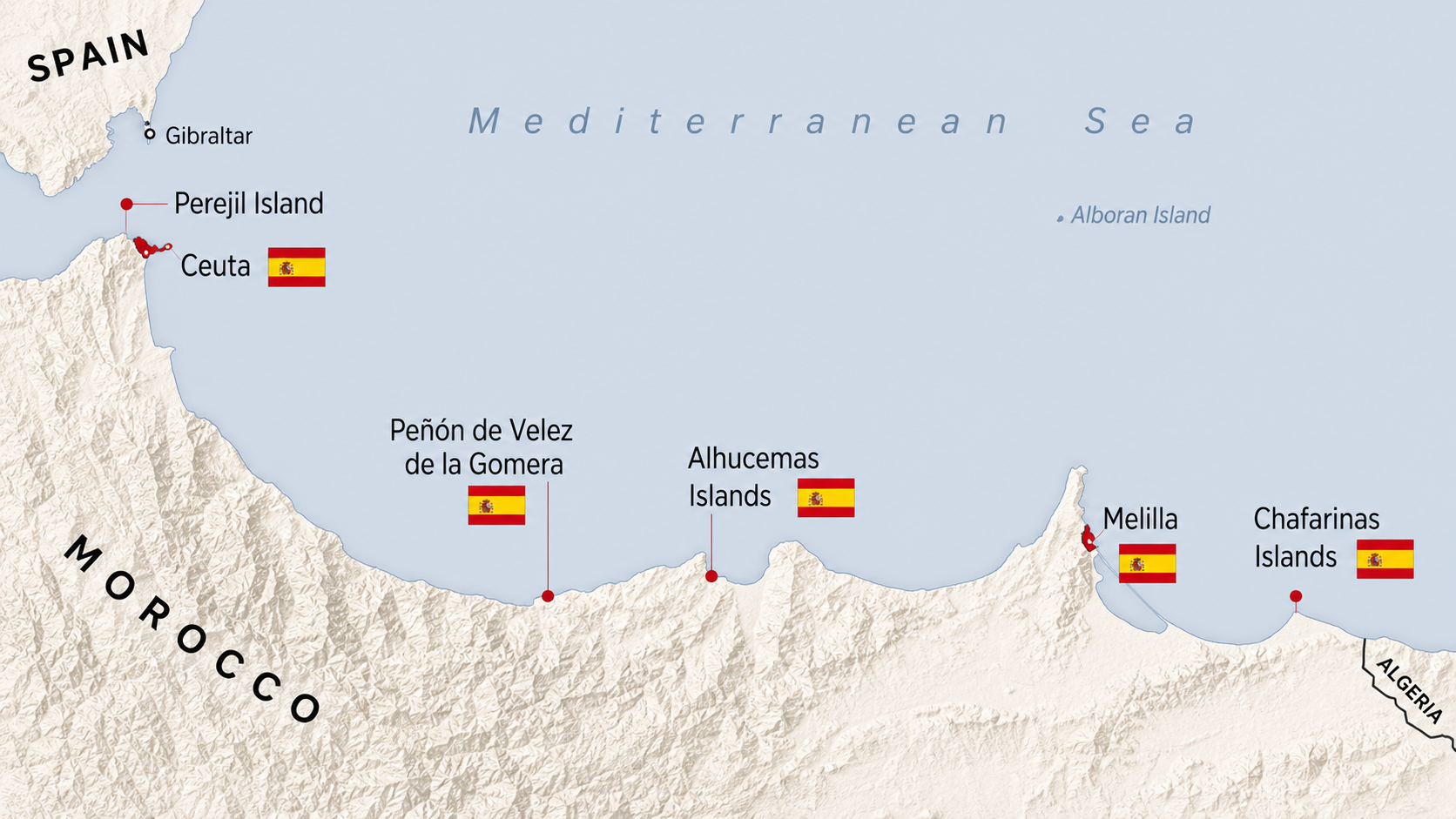
Spain’s presence in Africa is often described through six territories: Ceuta, Melilla, Peñón de Vélez de la Gomera, the Alhucemas Islands, the Chafarinas Islands and Perejil Island. Only Ceuta and Melilla are actual cities; the others are small islands, rocks or military outposts traditionally called plazas de soberanía.
Ceuta was captured by Portugal in 1415 and formally recognised as Spanish in 1668. Melilla has been under Spanish control since 1497. Spain acquired Vélez de la Gomera, Alhucemas and the Chafarinas between the 16th and 19th centuries, when European powers established fortified positions along the North African coast. Perejil, an uninhabited island, became internationally known after Spanish and Moroccan forces confronted each other there in 2002.
They form the European Union’s only land borders with Africa, making them important centres for trade but also major pressure points for migration and border security. Although they belong to the EU, they remain outside its customs territory and operate under special tax and commercial rules.
“Today, Ceuta and Melilla are autonomous Spanish cities with elected governments and multicultural populations of Christian, Muslim, Jewish and Hindu heritage.”
EuroAsia.News Editorial, reporting from Madrid
The smaller possessions have no permanent civilian population and are administered by Spain, primarily through military garrisons. Morocco has claimed all these territories since gaining independence in 1956, regarding them as remnants of colonial rule. Spain rejects that comparison, arguing that they have been integral parts of the country for centuries. The territories therefore remain small in size but highly significant in diplomacy, defence and relations between Europe and Africa.