China’s energy transition is not based solely on replacing coal with wind and solar. It is also undertaking one of the world’s largest programmes to reengineer coal-fired generation itself, combining ultra-efficient boilers, advanced combustion systems, digital controls, renewable integration and carbon-reduction technologies.
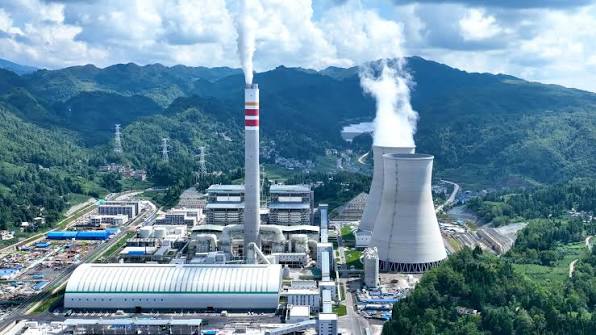
One of the clearest examples came in August 2025, when China put into operation what state authorities described as the world’s first 660 MW ultra-supercritical double-arch coal-fired generating unit. The project represents an important technical breakthrough because it combines two technologies that previously presented major engineering difficulties at this scale: ultra-supercritical steam conditions and a double-arch furnace specifically designed to burn anthracite and other low-volatile coals efficiently.
“Why the double-arch furnace matters.”
EuroAsia.News, reporting from Bejing
Anthracite has high carbon content but relatively few volatile compounds. It is therefore difficult to ignite and maintain stable combustion in a conventional pulverised-coal boiler. Incomplete combustion wastes fuel, lowers efficiency and can increase pollutant formation.
The double-arch furnace changes the geometry of combustion. Burners and air flows are arranged so that the pulverised coal particles remain longer inside a very hot combustion zone. The furnace creates a more controlled recirculation of hot gases and coal particles, improving ignition, flame stability and carbon burnout.
Combined with ultra-supercritical steam technology, the system extracts substantially more usable energy from the coal. Ultra-supercritical plants operate water and steam above the critical pressure where the conventional distinction between liquid water and steam disappears. Higher steam temperatures and pressures allow the turbine cycle to convert a larger percentage of the coal’s thermal energy into electricity.
China’s 660 MW double-arch project was developed specifically for difficult-to-burn anthracite. According to China Media Group reporting, the improved combustion system enables more uniform and complete combustion while reducing fuel consumption and emissions. Once fully operating, the overall project is expected to generate around 6 billion kWh annually and reduce CO₂ emissions by more than 300,000 tonnes per year compared with conventional technology.
Importantly, it is not conceived as an isolated coal station. It forms part of an integrated “wind + solar + coal + storage” energy system, in which coal generation provides controllable electricity while variable renewable production supplies an increasing proportion of total energy.
From 300 MW plants to 660 MW ultra-supercritical units
China’s coal fleet has changed dramatically technologically. The State Council Information Office has noted that whereas conventional 300 MW thermal units once dominated, modern 660 MW ultra-supercritical units have increasingly become the leading configuration.
The difference is significant. Every percentage point gained in thermal efficiency means less coal must be burned to produce the same quantity of electricity. Applied across hundreds of gigawatts of generating capacity, seemingly modest efficiency improvements translate into millions of tonnes of coal and CO₂ avoided annually.
China has also been developing even higher-temperature advanced ultra-supercritical systems, including research around 630°C, 700°C and ultimately still higher steam conditions. Increasing temperature creates difficult materials-engineering problems because boiler tubes, turbine components and valves must survive extreme pressure, heat, corrosion and thermal cycling for decades.
The development of new nickel-based alloys, improved steels, turbine forgings, boiler materials and welding processes is therefore as important as the boiler design itself. China has conducted advanced programmes involving steam-temperature test loops approaching 760°C, illustrating how far research has moved beyond conventional coal-plant technology.
Retrofitting existing power stations
The second major element of China’s strategy is upgrading rather than immediately scrapping existing plants.
Modernisation can involve replacing turbine blades and seals, improving boiler heat-transfer surfaces, upgrading pulverisers, optimising air-to-fuel ratios, installing variable-speed pumps and fans, reducing auxiliary electricity consumption and adding sophisticated computerised combustion controls.
Artificial intelligence and real-time sensor systems can continuously monitor furnace temperature, oxygen concentration, coal quality, steam conditions and turbine operation. Algorithms adjust fuel and airflow to keep combustion close to its optimum efficiency point.
China is also conducting extensive flexibility retrofits. Traditional coal stations were built to operate continuously at high load. A system dominated increasingly by solar and wind requires the opposite: thermal plants must be capable of rapidly increasing and decreasing output.
Modernised boilers therefore receive burner modifications, thermal-management systems and control upgrades allowing them to operate safely at much lower minimum loads. Coal plants can reduce production when solar electricity floods the grid and increase output after sunset or during periods of weak wind.
The future function of coal power is consequently changing from permanent baseload generation toward grid balancing and security capacity.
Near-zero conventional air pollutants
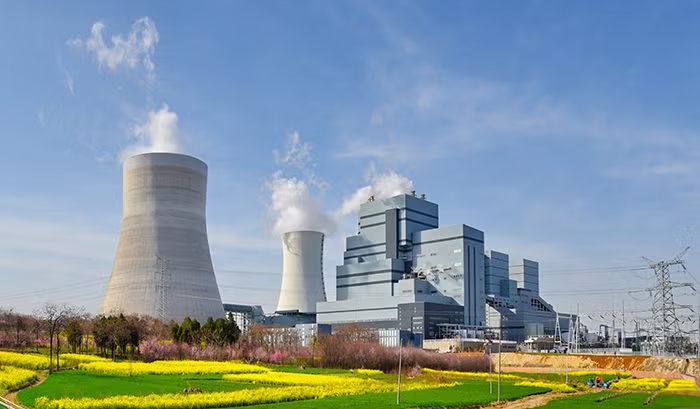
“Clean coal” does not mean that coal becomes emission-free. Nevertheless, China has made substantial progress in removing conventional pollutants from exhaust gases.
Modern Chinese plants combine low-NOx burners and selective catalytic reduction for nitrogen oxides, electrostatic precipitators or bag filters for particulate matter, and flue-gas desulphurisation for sulphur dioxide.
These systems can make the visible and local air-pollution profile of a modern station radically different from that of older coal plants. The remaining major challenge is CO₂, which conventional pollution-control equipment cannot remove.
Coal combined with green ammonia, biomass and carbon capture
China’s next phase goes considerably further. Its Coal Power Low-Carbon Transformation and Construction Action Plan 2024–2027 identifies three particularly important routes: biomass co-firing, green-ammonia co-firing and carbon capture, utilisation and storage — CCUS.
Green ammonia can be produced using hydrogen generated from renewable electricity. Part of a power station’s coal input can then be replaced by ammonia, reducing the amount of fossil carbon entering the furnace.
Biomass offers another route. Agricultural residues and other suitable biomass fuels can replace a proportion of the coal after appropriate modifications to fuel handling, burners and combustion controls.
The most ambitious option is CCUS. CO₂ is separated from the power station’s exhaust, compressed and transported for industrial use or permanent geological storage. Instead of replacing the entire generating plant, carbon-capture equipment can theoretically be added to selected existing facilities.
The Chinese government’s pilot programme aims for participating low-carbon coal projects to reach substantially lower carbon intensity than comparable conventional stations and ultimately achieve reductions of around 50% by 2027 in the targeted demonstration projects.
A different concept of the coal power station
China’s approach therefore illustrates what “green coal power” actually means technologically. It does not make coal renewable, and a coal station without carbon capture still releases substantial CO₂.
What is emerging instead is a new type of thermal-power infrastructure:
ultra-supercritical steam, double-arch and advanced combustion systems, digital optimisation, extremely low conventional pollutant emissions, flexible operation, renewable-energy integration, energy storage, alternative fuels and potentially carbon capture.
The 660 MW ultra-supercritical double-arch unit is particularly significant because it demonstrates that China is not merely installing pollution filters on old technology. It is redesigning the fundamental combustion and thermodynamic processes of coal generation.
China appears to be pursuing a pragmatic transition: build wind, solar, hydro, nuclear and storage on an enormous scale, while simultaneously transforming its vast coal fleet from inefficient baseload generation into high-efficiency, increasingly flexible and progressively lower-carbon backup infrastructure.
For countries that will continue using coal for decades, the implications could be considerable. China’s experience suggests that the technological choice is no longer simply between keeping an old coal plant or closing it. A third possibility is emerging: completely reengineering how coal-fired electricity is produced.