When Europeans think of digital banking, Revolut is usually the benchmark. Founded in London in 2015, the company turned low-cost currency exchange and international payments into a global financial platform that today serves more than 75 million retail customers.
But Revolut was not the beginning of digital-first banking.
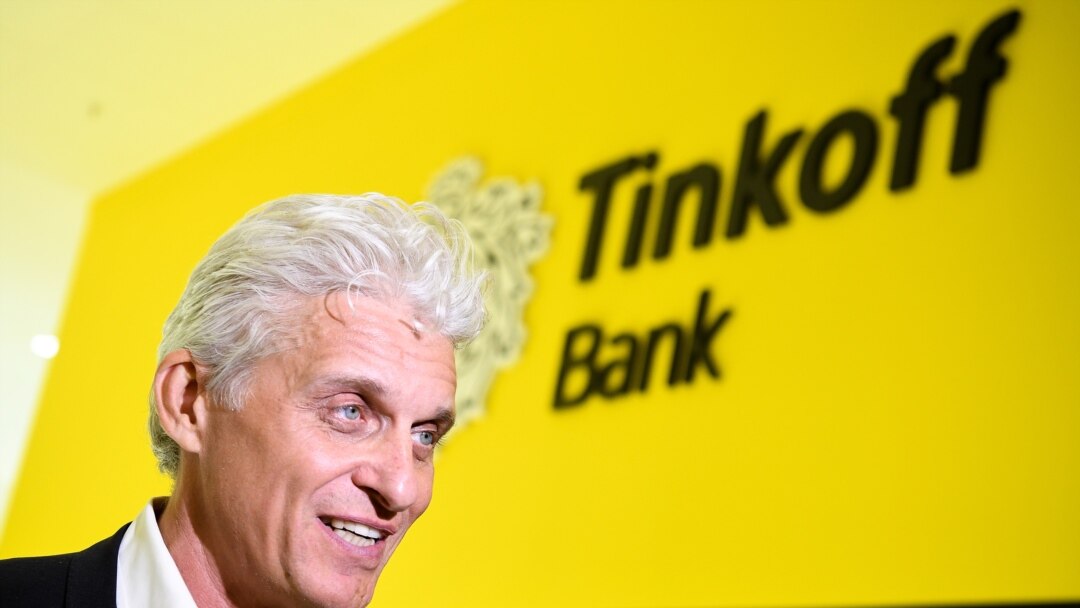
Almost a decade earlier, in 2006, Russia's Tinkoff Credit Systems — today's T-Bank — was already building a bank designed to operate without a traditional branch network. The concept was initially inspired by international direct-banking models such as Capital One, but Tinkoff developed it for the Russian market at a scale Europe had yet to see. Revolut arrived nine years later.
Revolut founder Nikolay Storonsky knew Tinkoff and its founder Oleg Tinkov, while the two sides later publicly debated whose products were more innovative. What can be said is that the idea of a large-scale, technology-driven bank without a conventional branch network was already a reality in Russia long before Europe's neobank boom.
“The relationship between the two histories is particularly interesting.”
EuroAsia.News
Today T-Bank is no longer a challenger. Its wider T ecosystem reported 55.7 million customers and 34 million monthly active users in the second quarter of 2026, alongside more than one million active business customers. Banking now sits beside investments, insurance, travel, shopping and numerous lifestyle services.
Central Asia takes the model further
If Tinkoff helped demonstrate the digital-bank model, Kazakhstan's Kaspi.kz illustrates what comes next.
Kaspi's Super App has around 15.9 million monthly active users, with customers averaging roughly 77 transactions per month. Banking, payments and lending are combined with e-commerce, travel, merchant services and government functions. Its payments platform alone processed approximately $23.7 billion in the first quarter of 2026.
Another Kazakh group, Freedom, is pursuing an equally broad ecosystem strategy. Freedom SuperApp combines banking and payments with investment, insurance, shopping and around 30 government services. Monthly active users reached 2.59 million in March 2026, up 154% from a year earlier.
Uzbekistan has meanwhile become one of Eurasia's most dynamic digital-finance markets.
TBC Uzbekistan finished 2025 with 23 million registered users and six million monthly active users. Its ecosystem combines mobile-only TBC Bank Uzbekistan, the Payme payment platform and instalment-finance services — building financial services around the smartphone rather than the branch.
Its competitor Uzum Bank follows a different approach: embedding finance directly into commerce. More than five million Uzum Visa cards are in circulation, while the wider Uzum ecosystem combines banking, marketplace shopping, food delivery, BNPL and services for businesses. Uzum says its bank processed $11.1 billion in payment volume during 2025.
Türkiye, Azerbaijan and Kyrgyzstan

Türkiye's Enpara is closer to the classic branchless-bank model. After operating for years within QNB Türkiye, it became an independent bank in August 2025. By the end of that year it served 8.6 million customers and ranked among Türkiye's ten largest private deposit banks — without relying on the traditional branch-heavy model.
In Azerbaijan, Birbank has developed from mobile banking into a wider digital ecosystem encompassing banking, investment, business services and a marketplace. It reports around 3.5 million users, while its AI assistant increasingly handles routine customer-service and banking tasks inside the application.
And in Kyrgyzstan, MBANK now serves more than three million customers — remarkable penetration in a country of roughly seven million people. Its platform combines payments, transfers, lending, cards, merchant services and access to more than a thousand everyday payment services.
Beyond the neobank
This is where Eurasia becomes more interesting than who is “the next Revolut.”
Revolut's great achievement has been taking a digital financial platform across borders. But many Eurasian companies are competing on a different dimension: how much of a customer's daily economic life can be integrated into one ecosystem.
T-Bank combines finance with lifestyle services. Kaspi connects consumers, merchants, payments and commerce. Uzum embeds banking into e-commerce. Freedom links finance with investment and public services. TBC Uzbekistan combines digital banking with payments and credit.
The next generation of banking may therefore look less like a traditional bank transferred onto a smartphone.
It may look like a digital ecosystem in which banking is simply one function among many.
And in that evolution, Eurasia is not following Europe. In several respects, it has been experimenting with the model for longer — and may now be pushing it further.