Southern Europe may still dominate the continent’s summer tourism industry, but the extreme heat of 2026 is accelerating a quieter shift: more travellers are deliberately choosing cooler northern destinations. France’s Côte d’Opale, stretching along the Channel coast around Calais, Boulogne-sur-Mer and Wimereux, has emerged as one of the clearest examples.
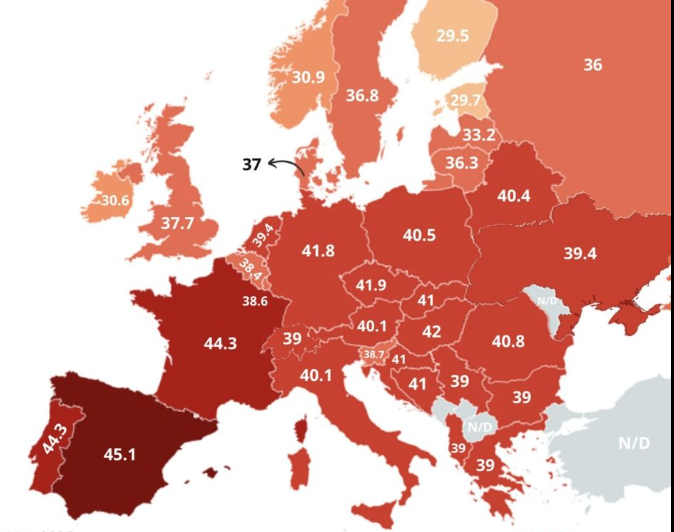
The region, once better known internationally for cross-Channel migration routes than luxury tourism, is enjoying an unusually strong summer. According to local tourism officials, British visitor numbers in early July were 53% higher than a year earlier. Hotels, holiday rentals and restaurants have reported heavy demand, while businesses in some coastal towns have struggled to keep up with crowds. The attraction is increasingly simple: temperature. During periods when inland France and Mediterranean regions have been exposed to temperatures around or above 40°C, the Opal Coast can be roughly 10°C cooler.
Scotland has also benefited, with flight bookings to Scottish airports rising by around 15% during June and July, while Nordic countries including Norway, Sweden, Finland, Denmark and Iceland are seeing stronger summer interest. Travel companies report that more customers are searching for landscapes, hiking, coastlines and outdoor activities without the intense heat increasingly associated with July and August in southern Europe.
“This is becoming part of a broader European “coolcation” trend.”
EuroAsia.News
The change does not mean the Mediterranean tourism model is collapsing. Spain, Italy, Greece and southern France remain among the world’s largest holiday markets. But extreme heat, wildfire risk, water shortages and higher peak-season prices are gradually altering when and where people travel. Families and older travellers in particular may be less willing to spend a week in temperatures approaching 40°C. Recent European wildfires have reinforced the perception that summer weather itself has become a travel risk.
For northern destinations, this creates an economic opportunity — but also a warning. Small coastal towns and rural regions were not necessarily designed for sudden mass tourism. Accommodation shortages, rising property prices, traffic and pressure on local infrastructure are already appearing in some increasingly popular areas.

Climate change may therefore reshape Europe’s tourism geography in two directions at once: reducing the comfort advantage historically enjoyed by the Mediterranean while increasing the commercial value of cooler Atlantic, Baltic and Nordic destinations.
The European summer holiday map is unlikely to change overnight, but in 2026 the direction of travel is becoming increasingly visible.