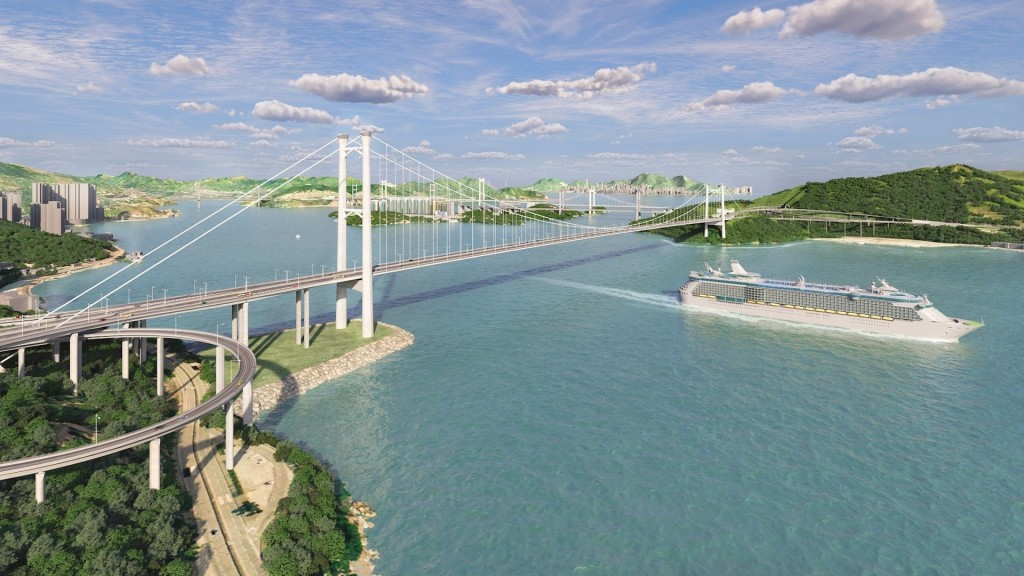
More than twenty years after it was first proposed, one of Hong Kong's most ambitious bridge projects is finally moving towards construction. The Tsing Lung Bridge, forming the southern end of the future Route 11 highway, will connect Tsing Lung Tau in the New Territories with North Lantau and create an important new road corridor between northwestern Hong Kong, the airport region and the urban centre.
The idea is not actually new. An earlier Tsing Lung Bridge was developed around 2000–2002 as part of the proposed Route 10. That version was planned as a suspension bridge with a spectacular 1,418-metre main span, slightly longer than the famous Tsing Ma Bridge. Construction was originally expected to begin in 2003, with opening around 2008, but the wider Route 10 project was eventually shelved as transport priorities changed.
In 2018, HK$87.7 million was approved for a feasibility study of Route 11, which would provide an alternative to heavily used corridors including Tuen Mun Road and Tai Lam Tunnel. The new route is also intended to improve resilience: if an accident or typhoon disrupts one existing connection, traffic will have another major north-south route.
“The concept returned when Hong Kong reconsidered transport requirements created by the rapid development of the Northwest New Territories.”
EuroAsia.News Editorial
The redesigned Tsing Lung Bridge will be particularly substantial. Hong Kong's Highways Department says it will become the territory's first dual four-lane sea-crossing bridge, effectively providing four traffic lanes in each direction. Its main suspension span will measure approximately 1.3 kilometres, crossing the Ha Pang Fairway between Tsing Lung Tau and North Lantau.
The location creates an unusual engineering problem. The bridge lies close enough to Hong Kong International Airport for aviation height restrictions to influence the towers, while the shipping channels below require approximately 57 metres of navigation clearance. Engineers therefore cannot simply build two identical towers. The proposed suspension bridge has towers of unequal height and an asymmetric main span.
This constraint has been turned into an architectural feature. The towers will be H-shaped, while their cross-beams form a K, producing a giant visual "HK" when viewed together. The government hopes the structure can become a landmark in the tradition of the Tsing Ma and Stonecutters bridges. It is even examining a "bridge tourism" concept, potentially allowing visitors access to parts of the deck or underside and incorporating viewing or tourism facilities.
A major step came in June 2026, when the Highways Department signed the design-and-construction consultancy agreement for the bridge. Arup is involved in the consultancy, marking the transition from years of feasibility and preliminary planning towards detailed implementation.
The bridge is part of the much larger Route 11, an approximately 20-kilometre corridor linking North Lantau with the Northwest New Territories through bridges, tunnels and major interchanges. The government has accelerated the programme and is targeting 2033 for Route 11 to open, three years earlier than the previous 2036 objective. Environmental planning documents likewise identify 2033 as the expected completion date.
Its impact could be considerable. Route 11 should divert vehicles away from the increasingly constrained Tuen Mun Road, Ting Kau Bridge and existing Lantau connections, while providing better access between new development areas, Lantau, Hong Kong International Airport and the Hong Kong-Zhuhai-Macao Bridge.
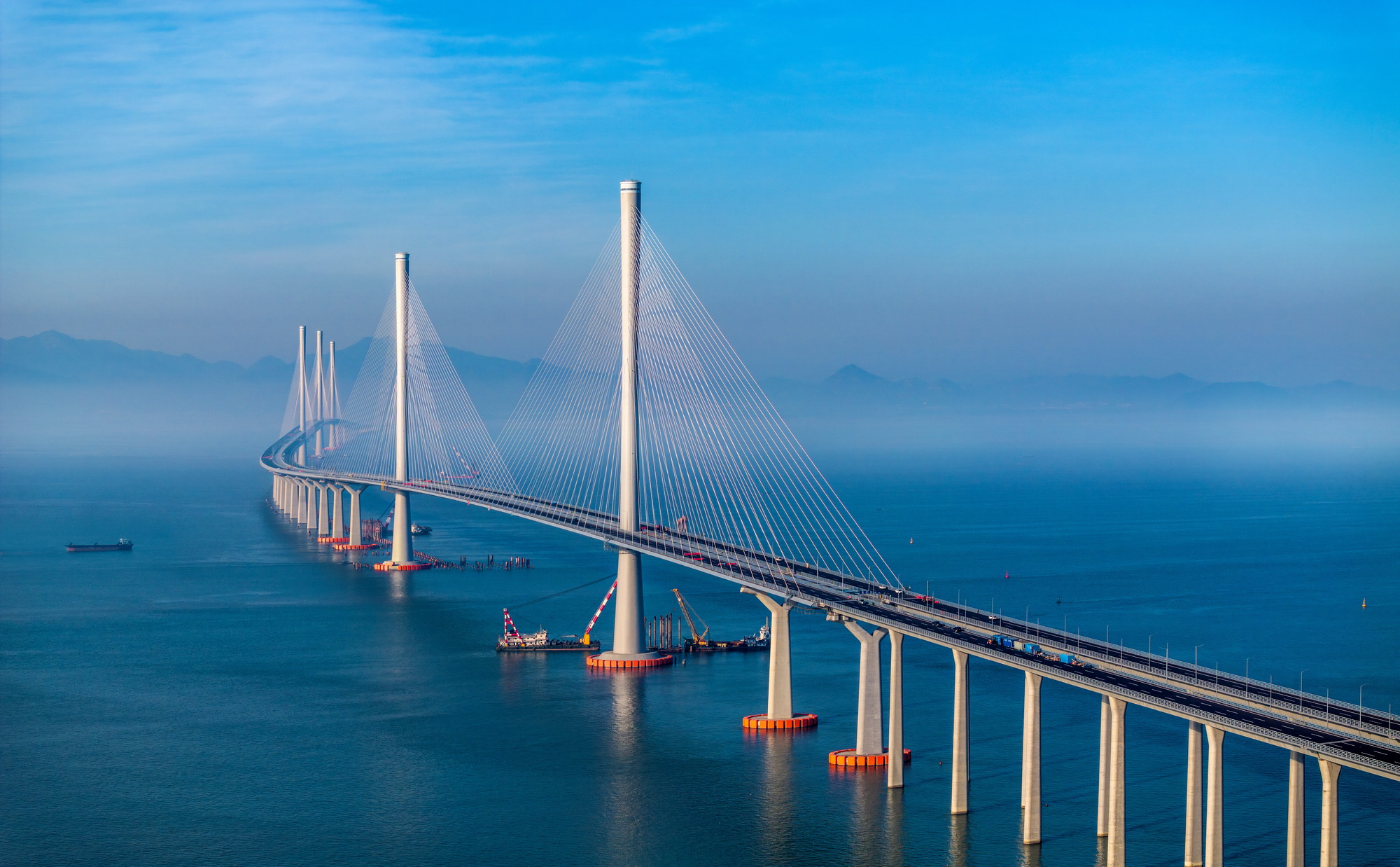
Hong Kong already possesses some of the world's most recognisable long-span bridges. Tsing Ma's main span measures 1,377 metres, while Stonecutters Bridge has a 1,018-metre cable-stayed span. The new Tsing Lung Bridge therefore represents not simply another crossing, but the continuation of a distinctive Hong Kong engineering tradition.
What makes the project particularly unusual is its history. A bridge conceived at the beginning of the century, cancelled before construction, has returned more than two decades later in a wider, higher-capacity and architecturally redesigned form. If the current timetable is maintained, motorists should finally cross Tsing Lung Bridge around 2033—roughly thirty years after the first version was originally supposed to open.