The Battle of Kursk stands as a defining moment of the Second World War—a sprawling, 50-day confrontation that shattered the myth of German military invincibility and irrevocably shifted the strategic balance on the Eastern Front. Fought across the vast plains of western Russia and eastern Ukraine, this colossal engagement was not merely a battle but a brutal, attritional test of industrial might, tactical innovation, and human endurance.
The Strategic Context: The Kursk Salient
This 240-kilometre-wide protrusion of Soviet-held territory was a prime target for the Wehrmacht. For the Germans, eliminating this bulge promised to shorten their defensive lines, regain the strategic initiative, and deliver a devastating blow to the Red Army. For the Soviets, it was a critical defensive position and a potential launching pad for future offensives.
“In the aftermath of the German defeat at Stalingrad and a series of fierce winter offensives, a massive bulge, or salient, had been driven deep into the German lines, centered around the city of Kursk.”
EuroAsia.News
The Forces: A Clash of Titans
The sheer scale of the forces assembled for Operation Citadel (Unternehmen Zitadelle), the German offensive, is staggering. The German assault force comprised nearly 50 divisions—roughly 900,000 troops. This included 17 motorized and armored divisions, fielding approximately 2,700 tanks and mobile assault guns, including the new, heavily armored Tiger and Panther tanks. They were supported by over 2,000 aircraft.
In anticipation of the attack, the Soviets constructed an exceptionally dense and deep defensive network, designed to bleed the German offensive white before it could breach the salient. It is estimated that the entire battle involved a total of 4 million soldiers, over 69,000 guns and mortars, 13,200 tanks and self-propelled guns, and up to 12,000 aircraft on both sides. Soviet defenses were anchored by thousands of kilometers of trenches and anti-tank ditches, and millions of mines. In key sectors, they positioned anti-tank guns every 10 meters.
The Battle: The Northern and Southern Pincers
The German offensive, launched on July 5, 1943, was a classic double envelopment, designed to cut off the entire salient. In the north, General Walter Model's 9th Army attempted to drive south towards Kursk but encountered a wall of Soviet defenses, fortified by the Central Front under General Rokossovsky. Model's advance stalled after only 16 kilometers, his elite panzer units bled dry by minefields and relentless anti-tank fire. The terrain, rich in iron ore, also interfered with minesweeping equipment, making the job of clearing a path even more dangerous.
The southern pincer, commanded by General Hermann Hoth's 4th Panzer Army, achieved more dramatic gains, advancing up to 48 kilometers into the Soviet lines . The spearheads of this offensive included the elite Waffen-SS divisions, like the Das Reich and Totenkopf, and the Großdeutschland Panzergrenadier Division. They were supported on the right flank by General Werner Kempf's Army Detachment. Despite facing treacherous terrain and fierce resistance, the 4th Panzer Army managed to punch through multiple defensive belts, setting the stage for the titanic clash that would define the battle.
The Epicenter: Prokhorovka
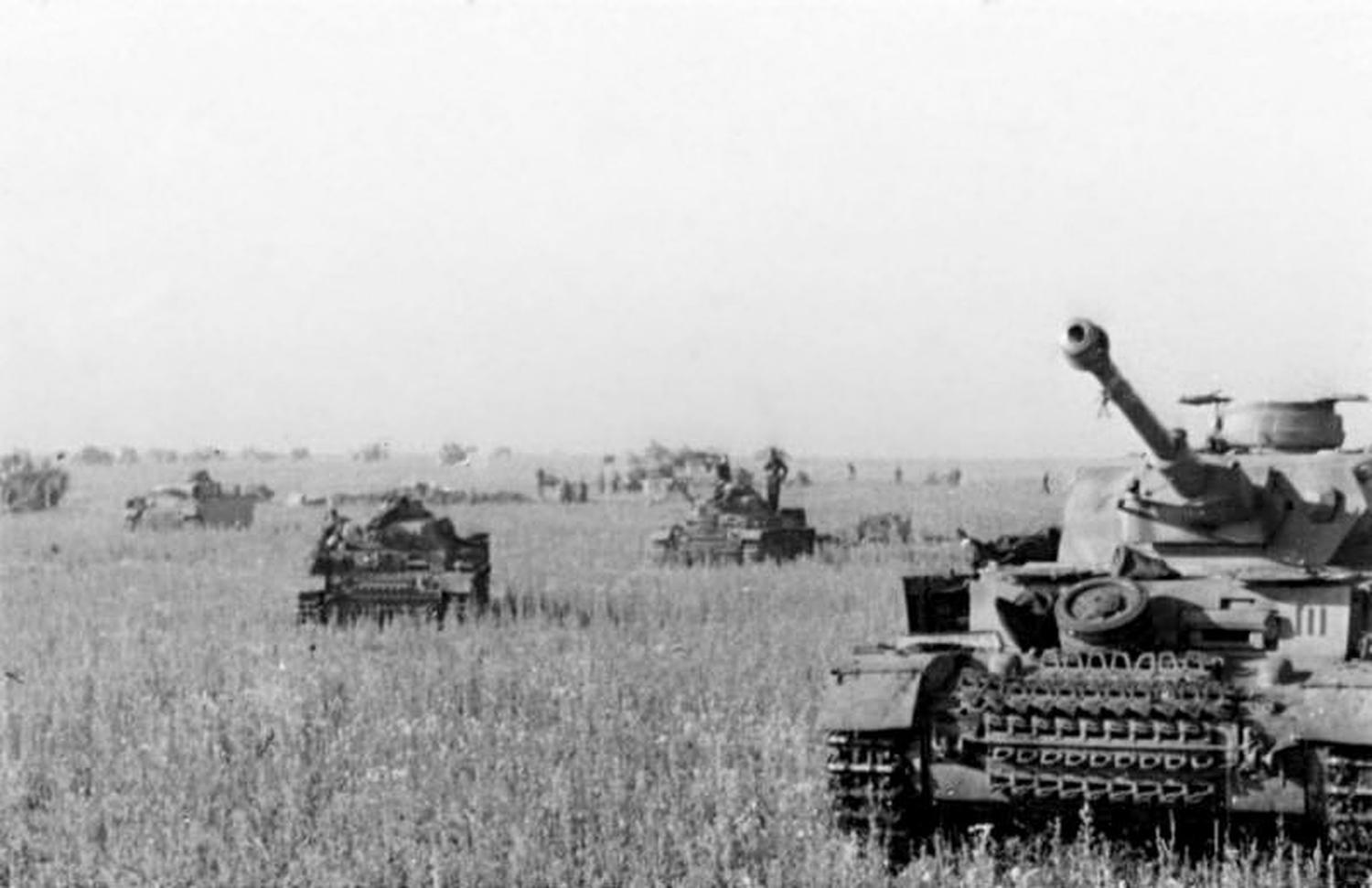
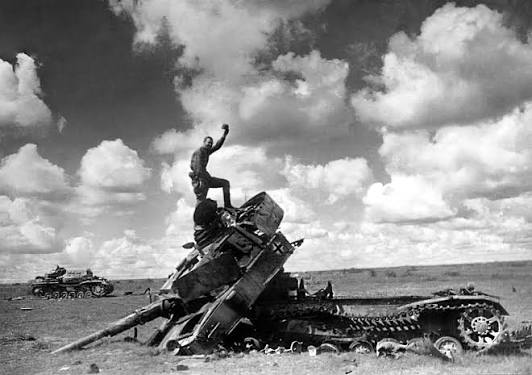
The climax of the battle of Kursk—and arguably the most famous tank engagement in military history—occurred on July 12, near the town of Prokhorovka . Here, the advancing German panzers collided with a massive Soviet armored counterattack. Over 1,200 tanks and self-propelled guns met in a swirling, close-quarters melee that raged across the fields and hills. "Never before or since have so many armored vehicles – more than 800 in all – clashed at point-blank range," one historian noted. German tank commanders described the scene: "From beyond the shallow rise about 150-200 meters in front of me appeared 15, then 30, then 40 tanks".
The Soviets, despite suffering heavy losses—some 200 tanks to the Germans' 50—succeeded in halting the German advance. While the battle of Prokhorovka was not a clean victory, it shattered the momentum of the southern pincer and denied the Wehrmacht its decisive breakthrough.
The Aftermath and Legacy
The failure of Operation Citadel was a strategic catastrophe for Germany. On July 12, the same day as Prokhorovka, the Soviets launched a massive counteroffensive against the German base at Orel, and soon after, another against Belgorod and Kharkov. The exhausted German forces were forced onto the defensive, retreating 240 kilometers on a 1,050-kilometre front in just two and a half months. By August 23, the Red Army had liberated Kharkov, and the battle was effectively over.
The human and material cost was immense. German casualties during the operation were around 56,827 men, while Soviet casualties were higher, at approximately 177,847. In the broader context of the battle, the fascist troops lost more than 500,000 soldiers, 1,500 tanks, and more than 3,700 aircraft. However, the lasting significance of Kursk is not solely about the numbers but its psychological impact. It marked the end of German offensive capability on the Eastern Front. The Wehrmacht had expended its best reserves and its newest, most advanced tanks in a battle it could not win, and the strategic initiative permanently passed to the Soviets.
The battle demonstrated the resilience and growing sophistication of the Red Army in both defensive and offensive operations. The 1943 battle of Kursk was not a sudden decision but a long conflict that, in many ways, was the beginning of the end for the Third Reich. It cleared the way for the great Soviet offensives of 1944–45, and ultimately, for the fall of Berlin.