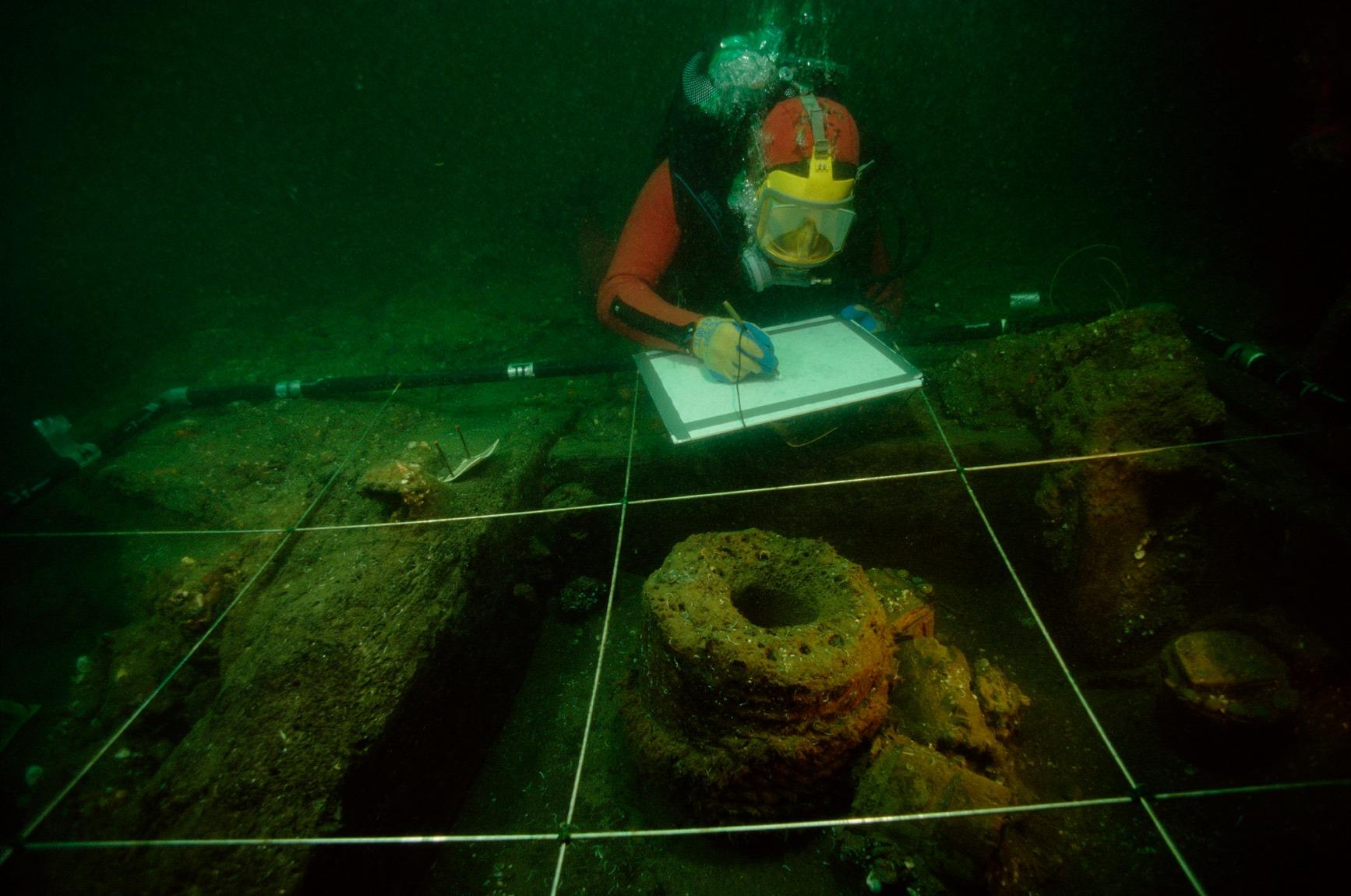
Underwater archaeologists exploring a submerged royal palace in Egypt have discovered an extraordinary bronze ring depicting the legendary Lighthouse of Alexandria, one of the Seven Wonders of the Ancient World.
More than two thousand years after Alexandria emerged as one of the Mediterranean's greatest commercial and intellectual centres, its waters continue to reveal remarkable secrets.
The latest discovery is unexpectedly small: a bronze signet ring carrying an engraved representation of the famous Pharos lighthouse.
The artefact was recovered from the submerged island of Antirhodos, once part of Alexandria's royal quarter and the location of an important palace.
The European Institute for Underwater Archaeology, working under the direction of French archaeologist Franck Goddio, announced the find on 7 October 2026.
Researchers describe it as the first known ring of its kind depicting the ancient monument.
Historical reconstructions commonly estimate its height at approximately 100 to 120 metres, comparable to a modern building of roughly 30 to 40 storeys.
Standing on the island of Pharos, it guided ships approaching one of the busiest ports of antiquity.
“An ancient skyscraper guiding Mediterranean trade Constructed during the Ptolemaic period in the third century BC, the Lighthouse of Alexandria ranked among the tallest structures of the ancient world.”
EuroAsia.News
Alexandria was far more than a regional harbour.
Its commercial networks connected Egypt with Greece, Rome, the eastern Mediterranean, North Africa and trade routes extending towards Asia.
Grain, textiles, papyrus, glass and luxury goods moved through its ports, contributing to the wealth of successive Egyptian and Roman administrations.
The lighthouse was therefore both a practical navigation system and a powerful symbol of economic influence.
Earthquakes progressively damaged the monument, especially during the medieval period, until its enormous structure disappeared.
For centuries, historians have relied on written descriptions, coins and archaeological fragments to reconstruct its appearance.
A tiny object with major historical significance
The newly recovered ring carries an image resembling representations of the lighthouse found on Roman coins from the second century AD.
Its importance lies not only in the engraving but also in its discovery location.
Antirhodos was associated with Alexandria's royal administration. The ancient Greek geographer Strabo described the island and its palace during his visit to Egypt in the first century BC.
According to the archaeological team, the ring strengthens the possibility that parts of the palace complex served administrative functions associated with the lighthouse.
Signet rings were frequently used in antiquity to authenticate communications and mark documents or containers with impressions in wax or clay.
However, the precise identity of the ring's owner and its original function remain unknown.
The discovery raises an intriguing question: was the lighthouse not merely a navigational landmark, but also an emblem used by officials responsible for Alexandria's commercial infrastructure?
The evidence invites investigation rather than a definitive conclusion.
An entire royal district beneath the sea
The Eastern Harbour of modern Alexandria covers archaeological remains from multiple periods of Egyptian, Greek and Roman history.
Ancient structures disappeared beneath the water through a combination of geological processes, coastal changes and destructive events.
Franck Goddio's underwater investigations have helped reveal palaces, temples, statues, vessels and extensive architectural remains.
His team's wider work has also brought renewed attention to the submerged ancient city of Thonis-Heracleion near the Nile Delta.
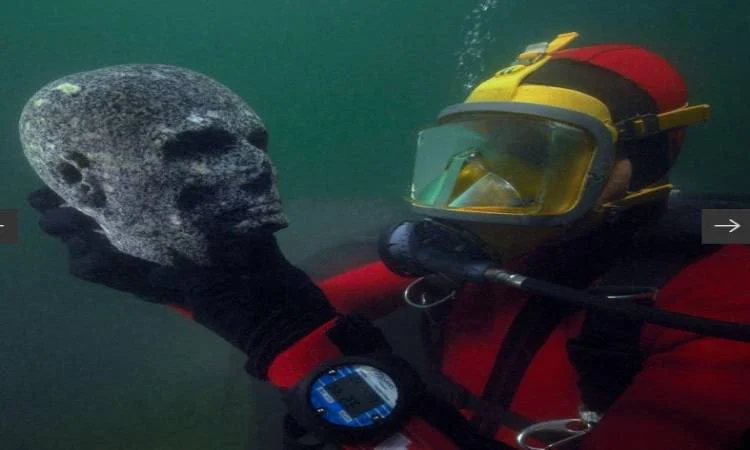
These discoveries are transforming understanding of the region's historical geography.
Instead of relying exclusively on texts written by ancient historians, archaeologists can now examine the physical remains of streets, buildings, religious sites and maritime infrastructure.
Reconstructing a vanished metropolis
Modern underwater archaeology combines diving, sonar mapping, photogrammetry and three-dimensional digital reconstruction.
Each newly recovered object contributes information about how ancient Alexandria functioned as a centre of government, knowledge and international commerce.
The bronze ring offers another valuable clue about the appearance and symbolic importance of its most famous landmark.
It also demonstrates how historical evidence can survive in unexpected places.
The lighthouse itself disappeared centuries ago, but its image remained preserved on an object small enough to fit on a finger.
For archaeologists, the greatest discovery may not simply be another depiction of an ancient wonder.
It is the possibility that the waters surrounding Alexandria still conceal substantial evidence about how one of history's greatest international cities was governed, supplied and connected to the wider world.